Pregnancy does not automatically mean giving up exercise. For most women with healthy, uncomplicated pregnancies, regular physical activity is considered safe and beneficial.
The American College of Obstetricians and Gynecologists (ACOG) encourages women to continue or begin appropriate physical activity during pregnancy when there are no medical or obstetric reasons to avoid exercise.
The important part is understanding how much exercise is recommended, which activities are appropriate, when modifications may be needed, and which symptoms mean it is time to stop.
How Much Exercise Does ACOG Recommend During Pregnancy?
ACOG recommends that pregnant women aim for at least 150 minutes of moderate-intensity aerobic activity each week.
That could mean exercising about 30 minutes on five days a week, or dividing activity into shorter sessions throughout the week. Women who were not exercising before pregnancy can begin gradually and increase their activity over time.
Moderate intensity means you are working hard enough to increase your heart rate and breathing, but not so hard that normal conversation becomes difficult.
A simple way to judge intensity is the talk test. During moderate-intensity exercise, you should generally still be able to carry on a conversation. ACOG's clinical guidance also identifies a rating of approximately 13 to 14, or "somewhat hard," on the Borg Rating of Perceived Exertion scale as a useful reference for moderate exercise during pregnancy.
Strength Training During Pregnancy
Aerobic exercise is not the only form of activity ACOG supports.
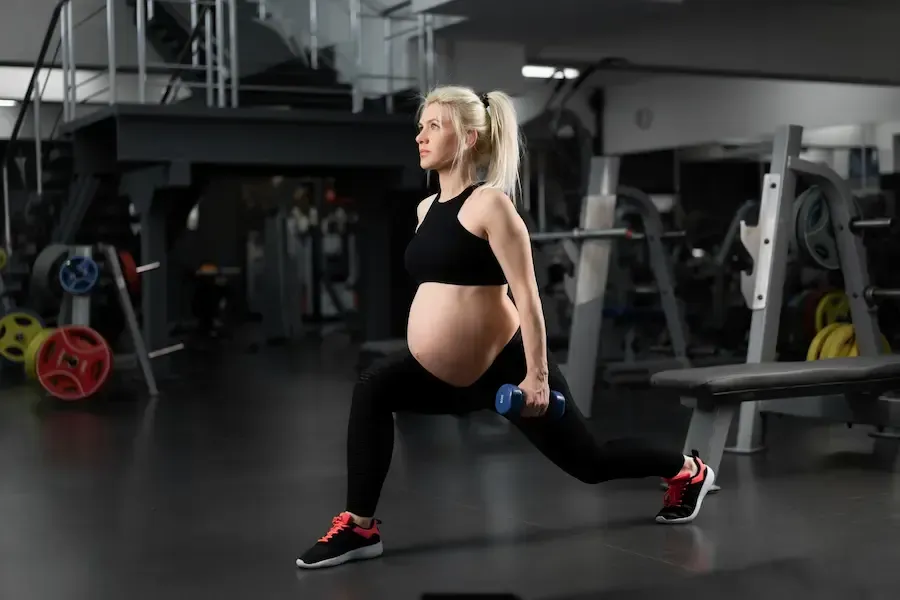
ACOG recommends that women with uncomplicated pregnancies participate in both aerobic and strength-conditioning exercise before, during, and after pregnancy.
Resistance training may include exercises using:
- Free weights
- Resistance bands
- Weight machines
- Body weight
- Other forms of controlled resistance
Pregnancy does not necessarily require abandoning strength training. Instead, exercises, loads, positions, range of motion, and overall training demand may need to change as the pregnancy progresses.
The appropriate program depends on the individual woman, her training history, her pregnancy, and how she is responding to exercise.
Can You Keep Exercising if You Were Active Before Pregnancy?
In many cases, yes.
Women who regularly exercised before pregnancy can often continue many of the activities they were already doing, as long as the pregnancy remains uncomplicated and their obstetric care professional has no concerns.
ACOG specifically states that women who habitually performed vigorous-intensity aerobic exercise or were physically active before pregnancy can continue physical activity during pregnancy and postpartum.
This does not mean that every workout should remain exactly the same for nine months.
Pregnancy produces significant changes in body weight, balance, joint mechanics, cardiovascular function, breathing, and the position of the growing uterus. Training may need to be adjusted in response to those changes.
The goal is not simply to make every workout easier. It is to choose an appropriate training level for the woman in front of you.
What if You Were Not Exercising Before Pregnancy?
Pregnancy can still be an appropriate time to become more active.
ACOG recommends starting gradually if you were previously inactive. Its patient guidance suggests starting with as little as five minutes of exercise per day and gradually increasing the time until you can tolerate longer sessions.
You do not have to be an athlete to benefit from physical activity during pregnancy.
Walking, swimming, stationary cycling, appropriately modified resistance training, and other moderate activities can provide useful ways to begin.
What Exercises Are Considered Safe During Pregnancy?
ACOG identifies several activities that have been studied during pregnancy and are generally considered safe and beneficial for women without contraindications.
These include walking, stationary cycling, aerobic exercise, dancing, resistance exercise, stretching, and water-based exercise. ACOG's patient guidance also identifies swimming, modified yoga, and modified Pilates as common options during pregnancy.
There is no single "pregnancy workout" that is appropriate for everyone.
Exercise selection should consider training experience, trimester, balance, comfort, symptoms, orthopedic history, medical conditions, pregnancy complications, and individual goals.
Exercises and Activities to Avoid During Pregnancy
Some activities create risks that you can't simply reduce by lowering the weight or intensity.
ACOG recommends avoiding activities with a significant risk of abdominal impact or falling, including contact sports, downhill skiing, water skiing, surfing, off-road cycling, gymnastics, and horseback riding.
Avoid scuba diving and skydiving during pregnancy. Hot yoga and hot Pilates are discouraged because of the risk of overheating.
For women who do not already live at high altitude, ACOG also advises avoiding exercise at elevations above approximately 6,000 feet.
What About Exercising on Your Back?
Advice about lying on your back during pregnancy is sometimes presented as an absolute rule, but the actual ACOG guidance is more specific.
After approximately 20 weeks of pregnancy, maintaining a supine, or flat-on-the-back, position during exercise may allow the enlarged uterus to compress major blood vessels. This can decrease blood return to the heart and potentially lower blood pressure.
For this reason, exercise positioning may need to be modified as pregnancy progresses.
This does not mean that accidentally rolling onto your back is automatically dangerous. The concern is prolonged positioning and how the individual woman responds.
Hydration and Overheating Matter
Pregnancy changes the body's response to exercise and heat.
ACOG advises women to drink plenty of water before, during, and after exercise and to avoid becoming overheated, particularly during the first trimester. Avoid exercise in very hot or humid conditions and use appropriate clothing and temperature-controlled environments when conditions are extreme.
For longer or more demanding exercise sessions, adequate nutrition is also important. Pregnancy increases energy demands, and exercise adds another layer.
Warning Signs: When to Stop Exercising
Don't confuse normal exercise effort and pregnancy-related discomfort with symptoms that require you to stop exercising.
ACOG identifies the following warning signs for discontinuing exercise during pregnancy:
- Vaginal bleeding
- Abdominal pain
- Regular, painful contractions
- Amniotic fluid leakage
- Shortness of breath before exertion
- Dizziness
- Headache
- Chest pain
- Muscle weakness affecting balance
- Calf pain or swelling
If one of these symptoms occurs, stop exercising and contact your obstetric care professional for appropriate follow-up. Depending on the symptom and its severity, you may need urgent medical evaluation.
Trying a lighter weight, changing exercises, or simply reducing intensity is not the appropriate first response to an exercise-discontinuation warning sign.
What Are the Benefits of Exercising During Pregnancy?
Regular physical activity can provide benefits throughout pregnancy.
According to ACOG, exercise may help improve physical fitness, reduce back pain, promote healthy pregnancy weight gain, and reduce the risk of gestational diabetes, preeclampsia, and cesarean birth. For women with uncomplicated pregnancies, regular exercise has not been shown to increase the risk of miscarriage, low birth weight, or premature delivery.
The important distinction is that these recommendations apply to women for whom exercise is not medically contraindicated.
Women with medical conditions or pregnancy complications require individualized recommendations from their obstetric care team.
Exercise During Pregnancy Should Be Individualized
ACOG guidelines provide an important foundation, but they are not a one-size-fits-all exercise program.
Two women at the same week of pregnancy may have very different exercise histories, symptoms, physical capacities, goals, and medical considerations.
One may be starting with short walks. Another may be continuing resistance training and running. Both approaches can potentially be appropriate.
Pregnancy exercise should therefore be based on the individual rather than on a rigid trimester-based formula.
As pregnancy progresses, you can adjust exercises by changing load, volume, range of motion, exercise position, stability demands, impact, rest periods, or movement selection.
The goal is to continue providing an appropriate training stimulus while responding to the physiological and biomechanical changes of pregnancy.
The Bottom Line
For most women with uncomplicated pregnancies, ACOG encourages physical activity rather than inactivity.
The major recommendations are straightforward:
Aim for at least 150 minutes of moderate-intensity aerobic activity each week, include appropriate strength-conditioning exercise, modify training as pregnancy changes, stay hydrated, avoid activities with unnecessary risk, and watch for warning signs.
Most importantly, exercise recommendations should be individualized.
Pregnancy changes the way you train. It does not automatically mean you have to stop training.
Women should discuss exercise with their obstetric care professional, particularly when beginning a new program or when medical or pregnancy complications are present.
This article is intended for educational purposes and does not replace individualized medical advice from an obstetrician, midwife, or other qualified healthcare professional.